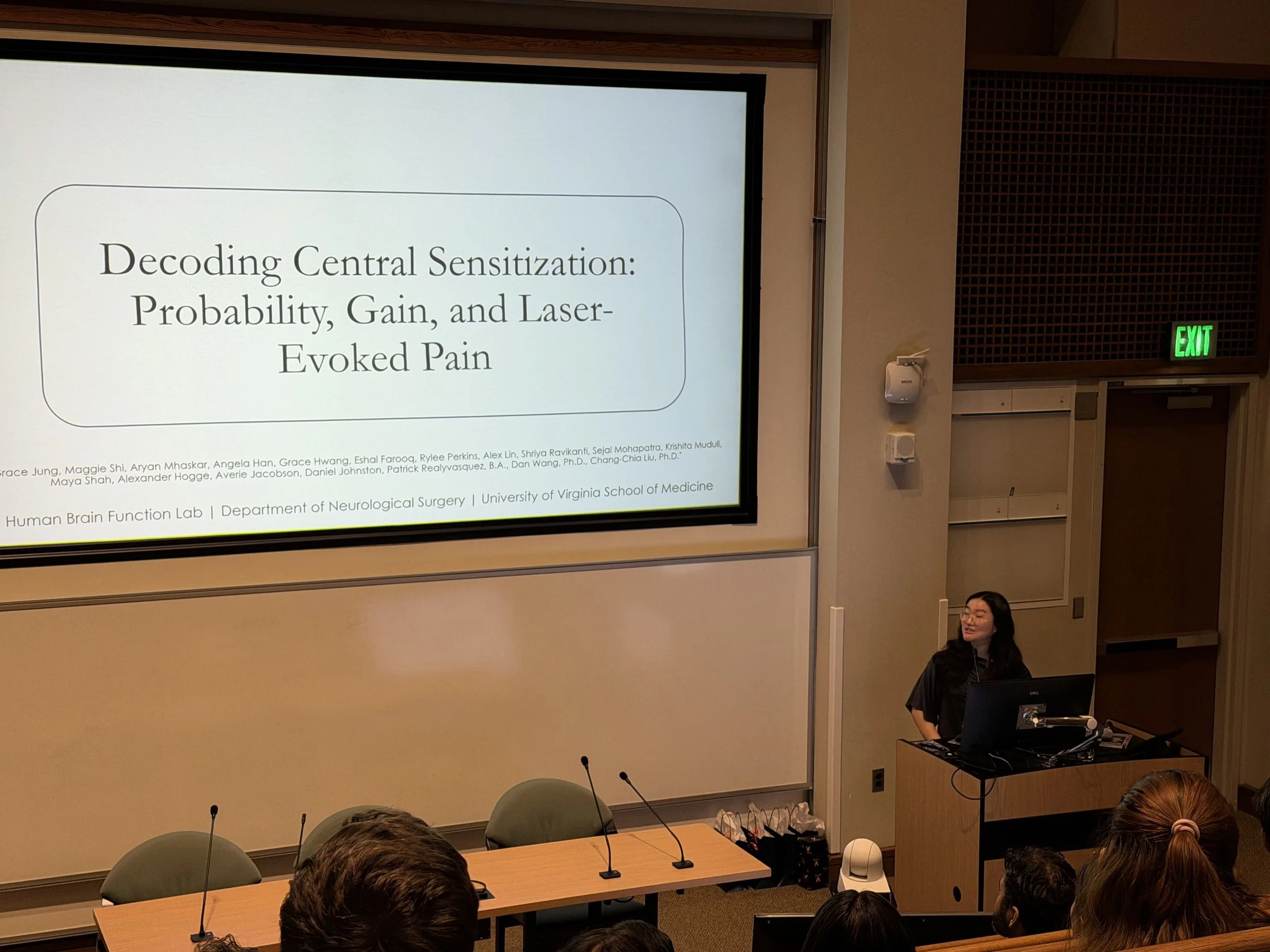
2025-2026 UVA Neurosurgery Research Symposium
June 12, 2026
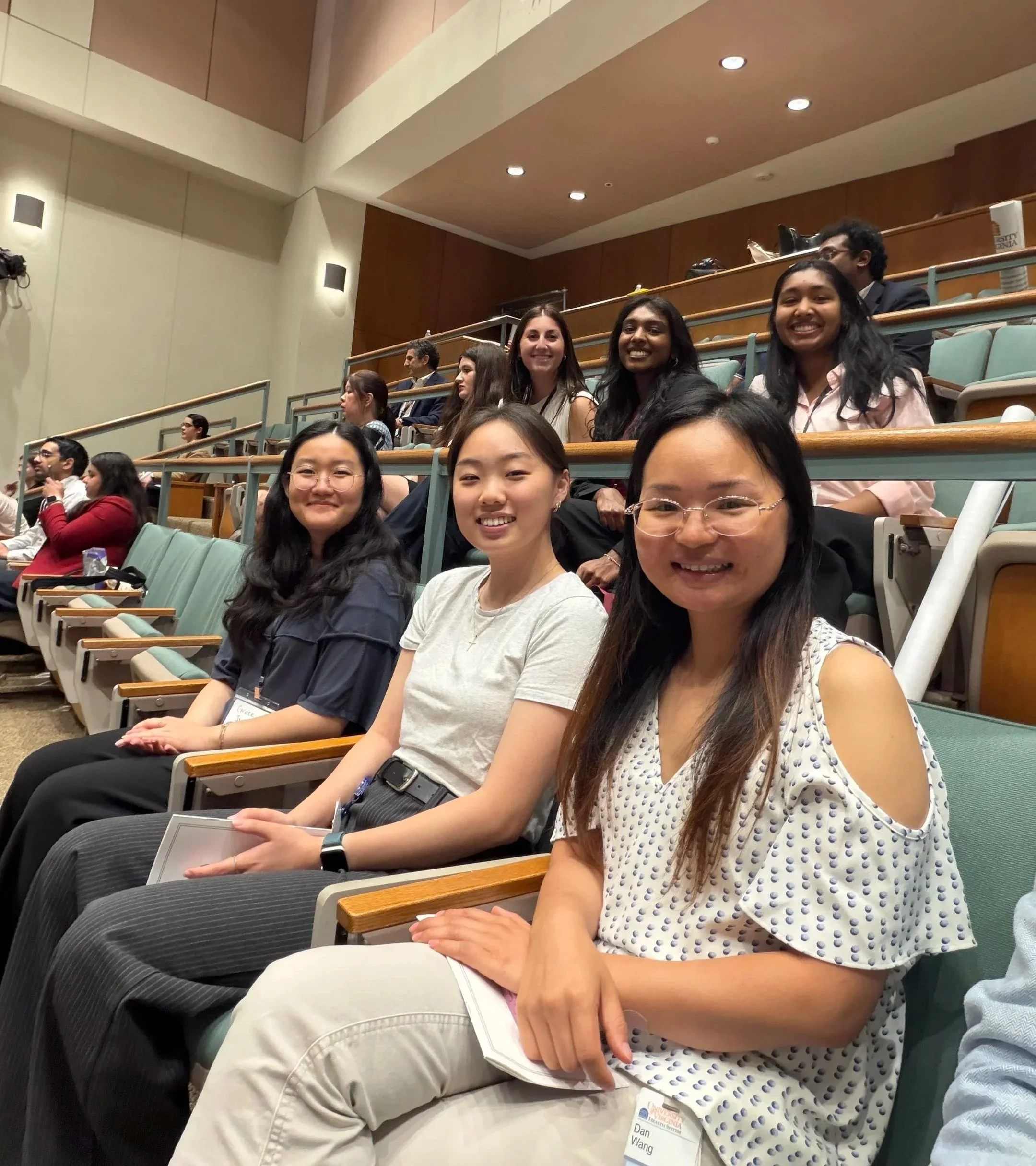
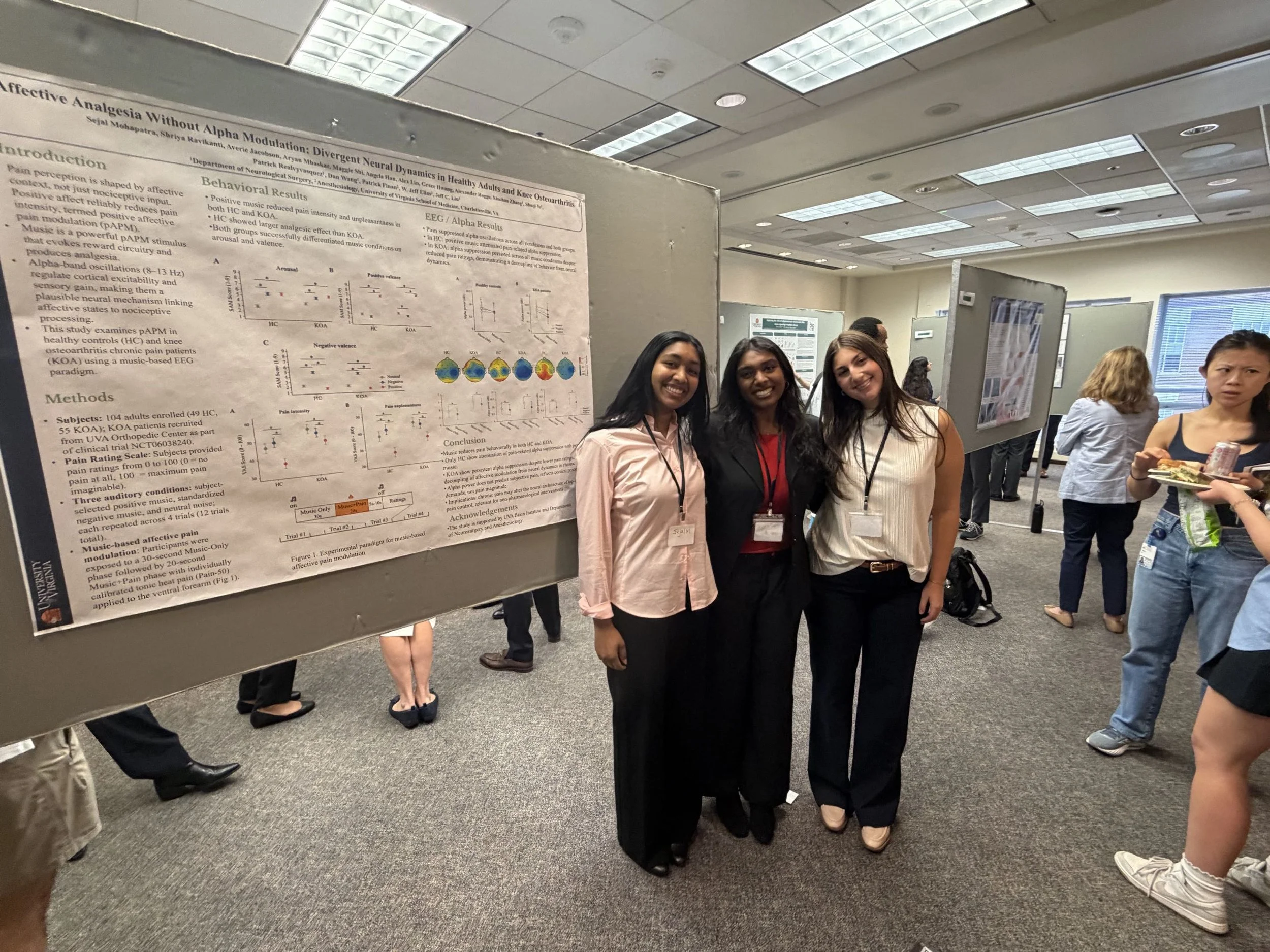
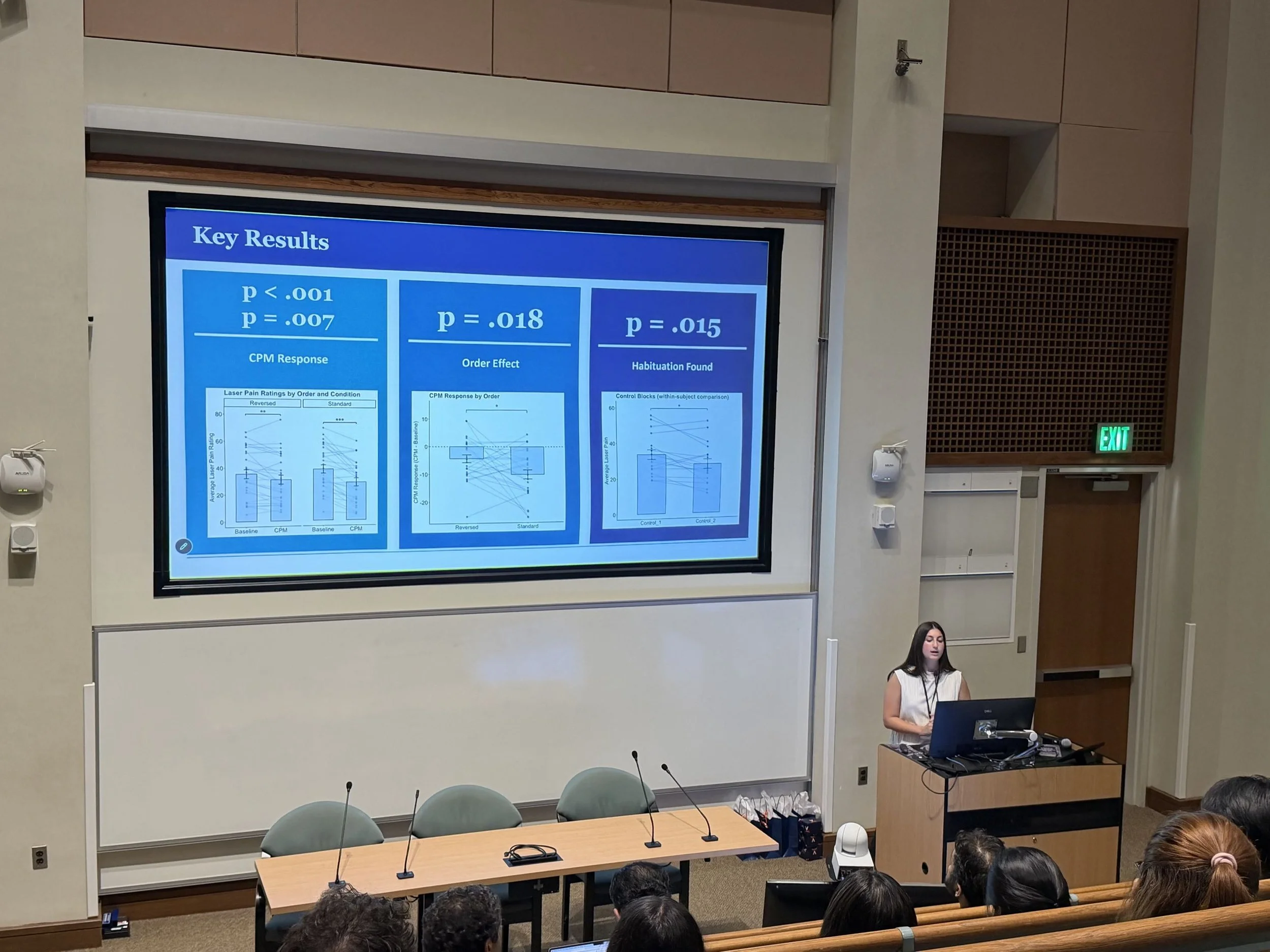
Congratulations to Sejal Mohapatra!
Her project “Affective Analgesia Without Alpha Modulation: Divergent Neural Dynamics in Healthy Adults and Knee Osteoarthritis” was selected in the 2025-2026 Neurosurgery Research Symposium as the
Best Clinical Poster Presentation Award!


Contactless laser elicits robust temporal summation compared with mechanical and contact‑heat protocols
When a repeated poke or heat pulse feels increasingly painful over time, even if the actual intensity hasn't changed, it is known as "temporal summation." This "wind-up" effect shows how the central nervous system amplifies pain signals, making it a crucial metric for understanding chronic pain. However, scientists use various tools to measure it—like physical pressure, heated metal probes, or lasers—making it hard to compare different studies.
In their latest publication, investigators in the Human Brain Function Lab compared five different pain-measurement methods on healthy volunteers to find the reliable tool. The results were striking: a highly precise, contactless heat laser triggered the pain amplification effect 100% of the time, dramatically outperforming physical pressure and contact heat.
This finding is a major step forward for the field. By proving that the laser is the most stable method, this study gives researchers a standardized, highly reliable tool to study chronic pain, test new therapies, and ultimately improve patient care.
Read the full article in the Journal of Pain: https://www.sciencedirect.com/science/article/abs/pii/S1526590026000921.
Pain related thoughts can heighten how the brain reacts to pain
Why do some people seem more sensitive to pain than others? A new study from in the Human Brain Function Laboratory at the University of Virginia, with Dan Wang as lead author, offers new insight into how pain related thoughts shape brain activity. The study, published in the European Journal of Pain, examined how pain catastrophizing, the tendency to focus on and exaggerate the threat of pain, changes the brain’s response to painful sensations.
Using high density EEG recordings during laser stimulation, the researchers found that individuals with higher catastrophizing scores showed stronger brain responses to pain even when their reported pain intensity was the same. This amplified response was specific to painful, not non painful, stimuli and appeared in brain regions that control attention and salience. These brain responses may represent an early marker of vulnerability to chronic pain.
Our findings suggest combining psychological assessment with brain based measures could help identify individuals at greater risk and guide more personalized pain management strategies.
Read the full article in the European Journal of Pain: https://onlinelibrary.wiley.com/doi/10.1002/ejp.70117.
Focused ultrasound to relieve severe head and neck cancer pain
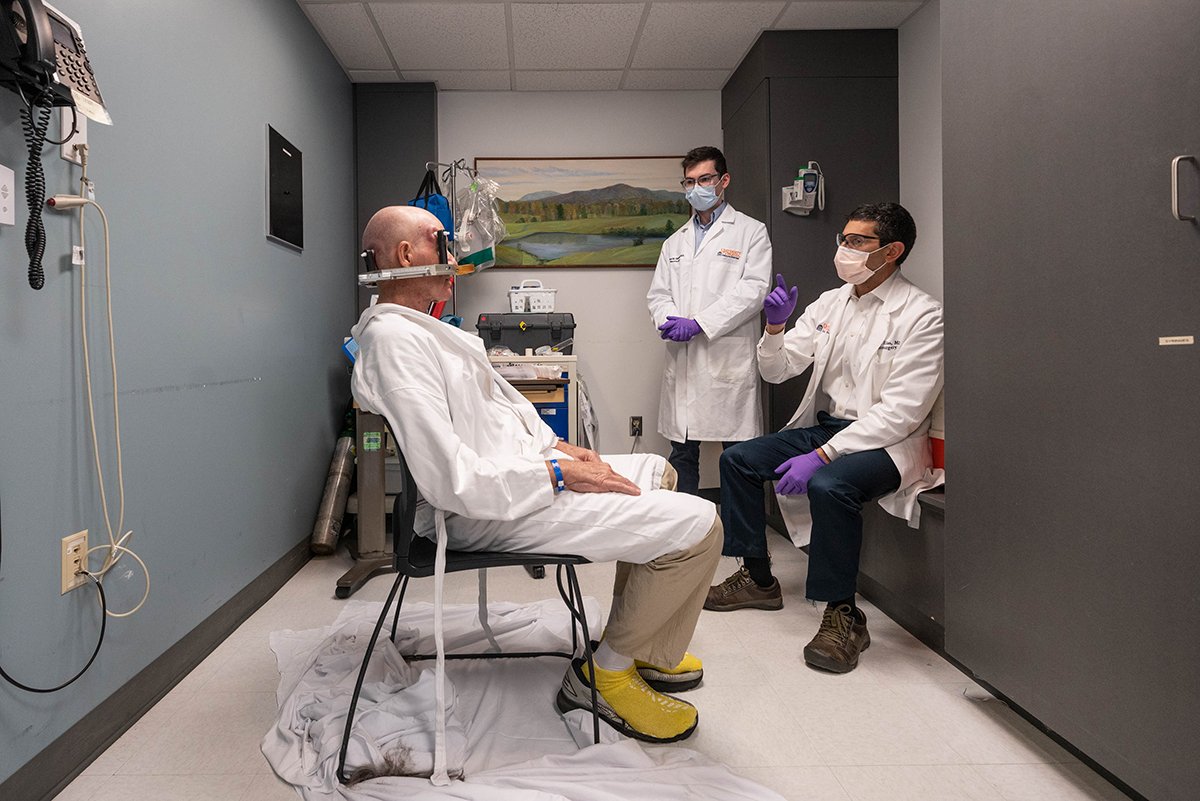
A pioneering clinical study from the University of Virginia has shown that focused ultrasound can be used to safely target deep brain regions to relieve otherwise untreatable cancer pain. Led by UVA neurosurgeon Dr. W. Jeffrey Elias, the study represents the first use of MRI guided focused ultrasound mesencephalotomy in patients with advanced head and neck cancer. The findings were published in Stereotactic and Functional Neurosurgery.
Historically, mesencephalotomy, which involves lesioning a small area of the midbrain to interrupt pain pathways, was effective but too risky for wide clinical use. Using modern MRI guided focused ultrasound, UVA neurosurgeons created precise, incision free lesions in five patients suffering from severe cancer pain. All patients tolerated the procedure, and most experienced meaningful pain relief with only temporary side effects such as numbness or mild eye movement disturbance.
This proof of concept study shows how advanced image guided lesioning can provide new options for managing end stage cancer pain while reducing surgical risk.
Read the full article in Stereotactic and Functional Neurosurgery: https://doi.org/10.1159/000547639.
Different parts of the body process pain differently
Why does the same painful stimulus sometimes feel stronger in one part of the body than another? A new study from the Human Brain Function Laboratory at the University of Virginia, reveals that the brain’s response to pain depends on where the pain occurs. The study, published in the Journal of Pain, used painless laser pulses to examine how pain builds up, or “summates,” across different body regions.
Thirty-one healthy participants received laser stimulation to the hand, leg, and lower back while their brain activity was recorded using high-density EEG. The team found that pain responses and related brain oscillations differed by body region: the lower back showed the strongest gamma-band brain activity but the weakest behavioral pain buildup. These findings suggest that different body areas engage distinct neural mechanisms when processing pain.
Understanding these regional patterns can help researchers develop more precise brain-based markers for chronic pain and improve future neuromodulation strategies.
Read the full article in the Journal of Pain: https://doi.org/10.1016/j.jpain.2025.105453.
Mapping how the brain controls the heart
A new study from the Human Brain Function Laboratory at the University of Virginia explored how specific regions of the insular cortex influence heart rhythm in humans. Using electrical stimulation in patients undergoing deep brain stimulation for chronic pain, the research team directly tested how different parts of the insula affect cardiac activity.
The results showed that stimulating the right posterior portion of the insula tended to increase heart rate, while stimulation of other regions produced different or opposite effects. These findings suggest that distinct areas within the insula play specialized roles in regulating heart function.
This work provides rare, direct evidence of how brain regions control autonomic processes such as heart rate, offering new insight into the brain–body connection and potential implications for understanding stress, pain, and cardiovascular regulation.
Read the full article in Neurology: https://www.neurology.org/doi/10.1212/WNL.0000000000211377
Congratulations to Grace Hwang!
Her project “Developing Brain Based Biomarkers for Individual Variability in Pain” has been selected for funding in
Harrison Undergraduate Research Award!

UVA Brain Retreat April 29, 2025


United States Association for the Study of Pain
2025 Annual Scientific Meeting - April 29 to May 2, 2025 in Chicago, IL


13th Congress of the European Pain Federation EFIC - Pain in Europe XIII (EFIC 2023)
A staged, comprehensive investigation for developing insular deep brain stimulation to treat refractory chronic pain
Invited speaker: Jeff Chang-Chia Liu


Transformative Neuroscience Pilot Grants in Human Neuroscience
Jeff Liu, PhD, P. Tom Fletcher, PhD, Patrick Finan, PhD, Mark Quigg, MD, Shayan Moosa, MD, & W. Jeff Elias, MD -
Departments of Neurosurgery, Electrical & Computer Engineering, Anesthesiology, and Neurology


$5 Million Grant Boosts Innovative Effort to Treat Chronic Pain
UVA Health researchers are pioneering a new way to treat chronic pain that does not respond to medication. Their innovative approach will receive more than $5 million from the National Institutes of Health to fund a clinical trial to develop brain stimulation for severe pain conditions.
Conceived by a new pain research team at UVA, the approach aims to modulate pain signals from deep inside the brain. The group has early evidence that a region of the brain called the insula plays an important role in our perception of pain. Based on that evidence, the team will optimize an established “neuromodulation” technique called deep brain stimulation for use in the insula, in the hopes it will provide much-needed pain relief.
If successful, the approach could shed light on the fundamental nature of pain itself, the researchers say.
See complete study on UVA health Newsroom

Fear of Pain Memory Acquisition and Extinction in Humans
Using intracranial recordings from patients with epilepsy, we aim to explore the brain mechanisms supporting pain-related fear acquisition and extinction.
Jeff Changchia Liu (PI), Per Benjamin Sederberg, William Jeff Elias


Tyler Spears - Electrical and Computer Engineering Mentors: Tom Fletcher; Jeff C. Liu
Tyler Spears is a PhD candidate in the Electrical and Computer Engineering program. He has recently started working on a project to analyze the white matter pathways involved in chronic pain using diffusion magnetic resonance imaging (dMRI).
Under the mentorship of Dr. Tom Fletcher and Dr. Jeff Liu, Tyler plans to develop a deep neural network for learning features from high-quality dMRI in the Human Connectome Project. The model will learn how to transfer these high-quality image features to clinical dMRI scans. This research will have significant impact in neurosurgical treatment of chronic pain, including in targeting transcranial focused ultrasound and in tracking changes to the brain white matter following a procedure.
Sounding Out the Future of Focused Ultrasound
UVA's Dr. Jeffrey Elias, who pioneered the use of high-intensity soundwaves to treat tremor and Parkinson’s disease, has now set his sights on erasing chronic pain.